Nearly a month has passed since the World Cup final.
The flags have disappeared from office desks. Players are back with their clubs, and people who spent a few intense weeks checking line-ups, injuries and kick-off times have mostly returned to normal life.
For sportsbooks, this is where the more interesting question starts.
What did the World Cup leave behind?
Big tournaments are exceptionally good at creating temporary football people. For a few weeks, someone who rarely watches league football can suddenly care deeply about whether a striker gets another shot on target, whether the next corner comes before half-time, or whether a substitute changes the match.
Betting adds another layer to that experience. A small stake can turn a neutral game into something personal. A shot is no longer just a shot. A foul, a corner or a late substitution suddenly matters.
But tournament adrenaline has an expiry date. A month later the national-team emotion is gone. There is no longer a World Cup match waiting every evening.
And yet some of those casual bettors come back. Not necessarily because they suddenly became dedicated football fans. They come back because the tournament left them with something specific: a player they now recognise, a market they enjoyed betting on, a type of betslip that felt intuitive, or simply a new way of watching a match.
That is where the real retention story begins.
Why some casual bettors stay
Some users stay because the tournament becomes personal. Not in the abstract sense of “football engagement.” Personal in a much simpler way.
They remember a player.
They enjoyed building a betslip.
They found a type of market that made sense to them.
They reacted to a live moment and wanted to feel that again.
A casual fan may not wake up after the World Cup thinking, “I need to follow Norway’s tactical development.” But they may think, “When does Haaland play again?”
Erling Haaland was already one of the biggest names in football before the tournament. But Norway’s run has given him a different kind of World Cup visibility. After Norway beat Brazil 2-1 in the Round of 16, with Haaland scoring both goals, The Guardian described the result as a stunning win that sent Norway into the quarter-finals. Brazilian reaction was fierce, with the defeat widely criticised back home and Brazil’s possession reported at just 34%, its lowest in a World Cup match since records began in 1966. (theguardian.com)
That kind of match does more than change a bracket. It creates a character. For many casual viewers, Haaland may shift from “famous Manchester City striker” to “the face of Norway’s impossible World Cup story.” Wired also reported how Haaland has become a viral World Cup figure through AI-generated fan content and memes, showing how modern tournament attention can spread far beyond normal match coverage. (wired.com)
For sportsbooks, this is where player-led engagement becomes interesting. A user may not be ready to follow every competition. But they may be ready to follow one player. They may want to know if he scores again, has another shot on target, assists, gets fouled, or dominates the next match.
The player becomes the bridge. And it is not only global superstars who create that bridge.
Cape Verde goalkeeper Vozinha is a different kind of example. MarketWatch reported that the 40-year-old became one of the breakout figures of the tournament, with his Instagram following reportedly rising from 50,000 to 17.6 million in under three weeks after standout performances for Cape Verde. (marketwatch.com)
That is the magic of the World Cup. A goalkeeper from a smaller football nation can become a global story almost overnight. Casual fans may forget the full group table, but they remember the player who made the impossible saves. They remember the clip that kept appearing in their feed.
This is why player props matter in a retention conversation. They give casual fans a way to keep engaging with the people they remember.
When the winner is hard to call, performance markets feel more intuitive
As the tournament reaches the playoff stage, the emotional stakes rise. But the outcomes can become harder to predict.
Knockout football is uncomfortable territory for casual bettors. A favorite can freeze. An underdog can sit deep for 90 minutes. A red card can change everything. Extra time and penalties can turn a confident prediction into a coin toss.
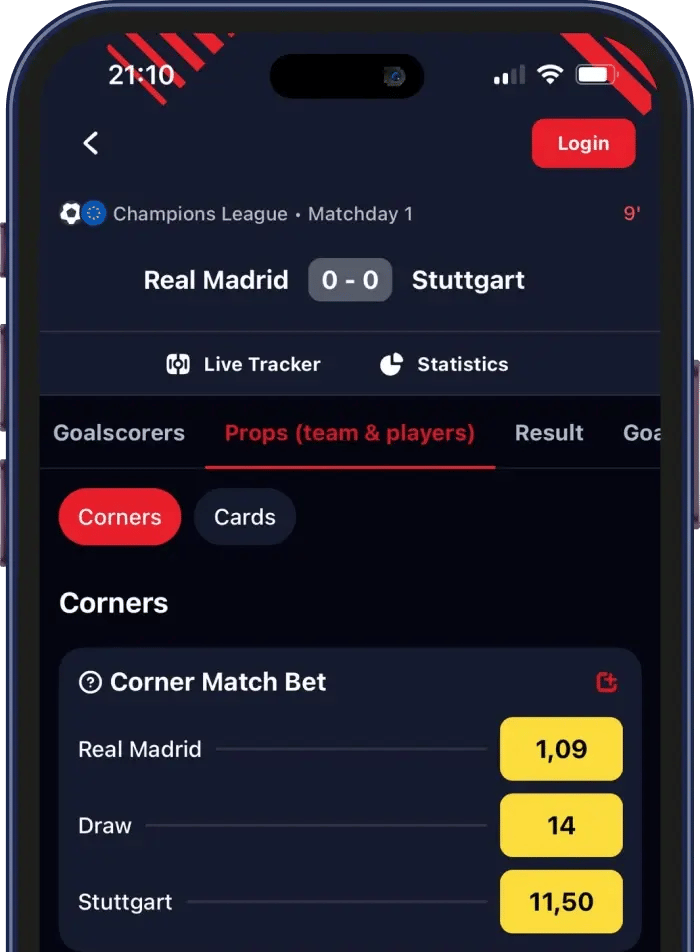
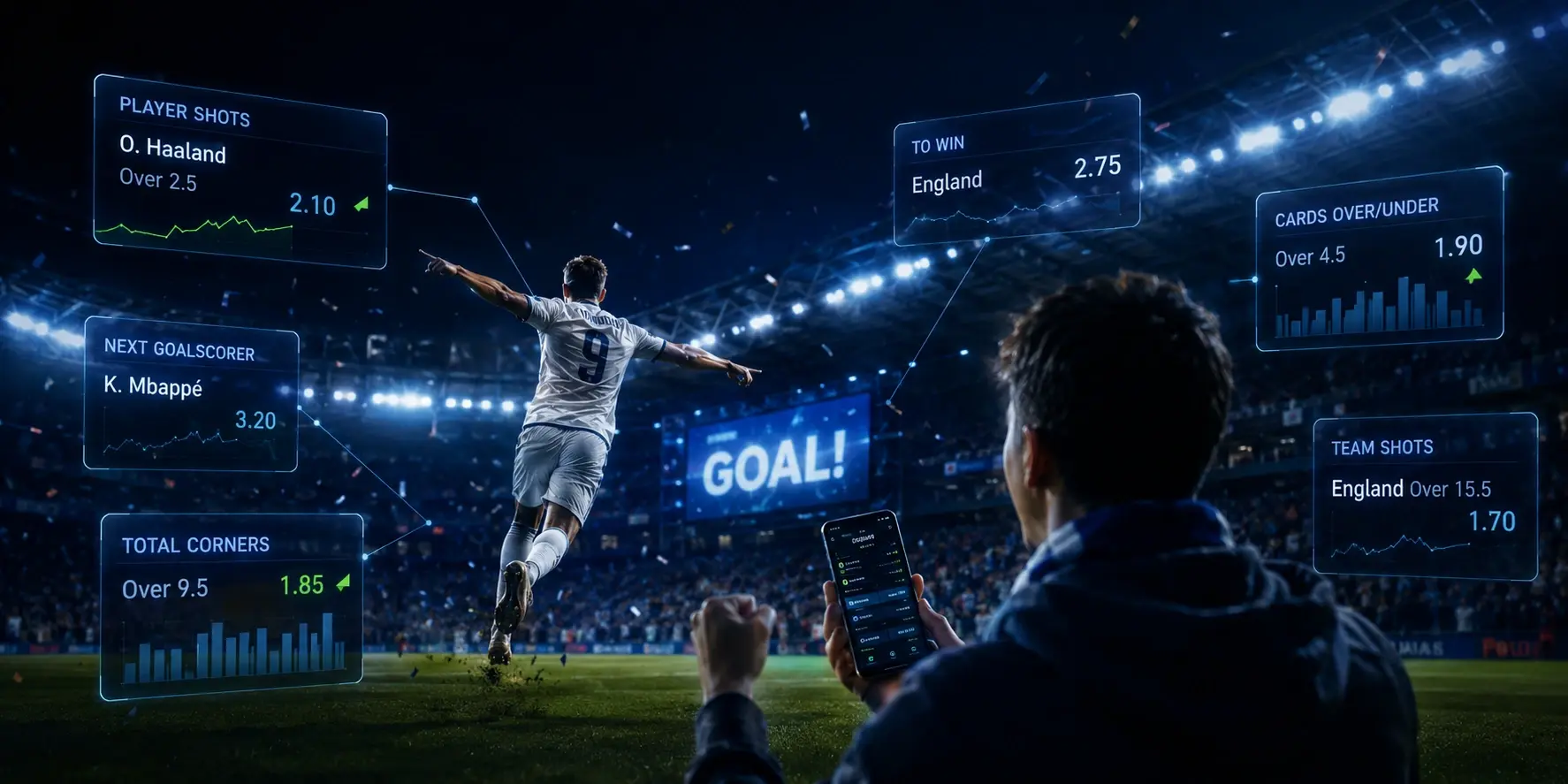
The bettor may still want the adrenaline, but not necessarily through a simple winner market. This is where player and team performance markets become more attractive. A casual bettor may not know who survives extra time. But they may still have a view on the match.
A dangerous forward will probably shoot.
A favorite chasing the game will probably force corners.
An underdog defending deep may commit fouls.
A tense knockout match may produce cards.
A winger who keeps beating his marker may draw tackles.
A team under pressure may concede more attempts.
During a playoff match, a casual fan may feel less confident saying, “This team will win.” But they may feel much more comfortable saying, “This player looks dangerous,” or “This team is going to keep attacking.”
That shift creates a behavior pattern.
For sportsbooks, this is where props stop being just additional markets. They become a way to match how people actually watch football under pressure.
Props are not just more markets. They are clues about how people watch
A player prop, team prop, or match prop is not only a betting option. It is also a signal of what the user noticed.
One bettor follows goalscorers.
Another follows shots.
Another watches corners and pressure.
Another is drawn to fouls, cards, and physicality.
Another enjoys combining several small opinions into one betslip.
These choices say something about the football story the bettor is building in their head.
That is especially relevant for casual fans. They may not have deep tactical language, but they still understand patterns. They see a striker getting chances. They see a team pushing higher. They see a match becoming aggressive. They see a goalkeeper becoming the story.
The sportsbook experience becomes more memorable when it gives them markets that reflect those observations.
A casual fan who discovered player shots during the World Cup may not describe themselves as a props bettor. But they have learned a new way to watch football. They now know that a match can be interesting even when the final result is unclear.
That is the beginning of a football habit.
Bonuses can reopen the door, but they rarely create the reason to care.
That reason usually comes from football itself: the headline, the clip, the player, the controversy, the underdog run, the next fixture everyone is suddenly watching. The sportsbook’s role is not to manufacture that story, but to meet it with enough depth when the casual fan comes back looking for a way to feel involved again.